
[Editor’s note] Eating is the most important for the human’s survival. And the rice plays an important role in the development of human civilization. Today, rice is still one of the main foods in the world. Huaihua’s rice farming culture has a long history and holds a pivotal position in the long-standing Chinese rice farming civilization.
In Anjiang Town, Hongjiang City, as a part of the land of Wuxi, for 7,000 years the two divine farmers of ancient and modern times have nurtured an impressive agricultural culture. Carbonized rice grains dating back 7,400 years have been discovered at the Gaomiao Cultural Site in Anjiang Town, tracing the history of Chinese civilization back to 7,800 years ago.
Huaihua, one of the important origins of Chinese rice farming civilization and the birthplace of hybrid rice in the world, is where Yuan Longping goes global.
70 years ago, Yuan stepped into Anjiang Agricultural School across the river from the Gaomiao Cultural Site, where he began a 37 year long career in hybrid rice research and successfully cultivated hybrid rice. From then on, “a seed has benefited the world”.
In commemoration of Academician Yuan and the 50th anniversary of successful research on hybrid rice, during the golden autumn season, the original ethnic music concert “One Seed Benefits the World” jointly organized by the Publicity Department of the Hunan Provincial Party Committee, the Hunan Provincial Department of Culture and Tourism, the Hunan Provincial Federation of Literary and Art Circles, the Beijing Office of the Hunan Provincial People’s Government, and the Huaihua Municipal Party Committee and Government will premiere at the Beijing Concert Hall on September 4th, and one will be held in Changsha and Huaihua respectively on September 13th and 15th, to spread the urban brand image of “One Seed benefiting the World—Huaihua China” through music.
“Fragrant Rice Flowers”, “Mom, the Rice is Ripe”, “Beautiful Countryside”, “The Sea Beyond the Mountains”, such music with ethnic melodies tells the story of Academician Yuan’s patriotism, his journey to fight for world food security, and showcases the constant effort of the descendants of Wuxi in inheriting Yuan’s spirit and safeguarding national food security in the new era.
Through these wonderful music related to rice, people understand how this spiritual land of mountains and rivers is inextricably bound to rice.
Starting from today, Huaihua Daily, Huaihua News Network, and Pocket Huaihua APP have successively launched a series of reports on “Huaihua seeking the truth of the source of rice”, tracing the long history of Huaihua’s rice farming civilization, telling the story of the descendants of Wuxi shouldering the responsibility of “the birthplace of hybrid rice” and making contributions to food security as their own responsibility. They remain steadfast and continue to strive, and have walked out a new “rice” path of high-level opening and high-quality development.
The Gaomiao Cultural Site excavated carbonized rice grains dating back 7,400 years, tracing the history of Chinese civilization back to 7,800 years ago.
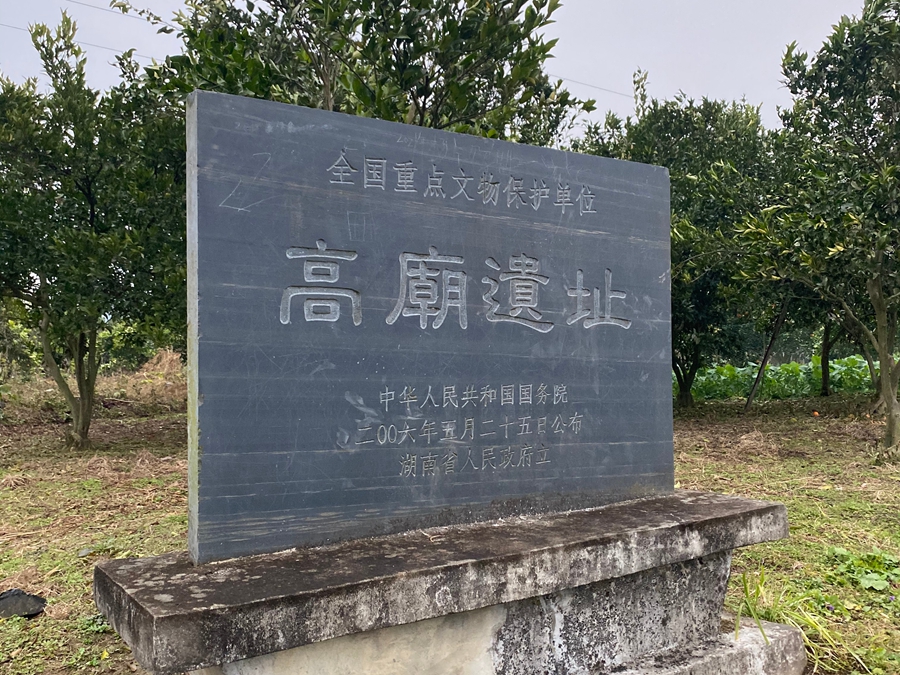
(In the golden autumn, around Yanli Village, Chatou Town, Anjiang Town, Hongjiang City, the grass and trees are blooming, verdant in the eyes, and the Yuan River stretches and flows tranquilly.)
In the golden autumn, around Yanli Village, Chatou Town, Anjiang Town, Hongjiang City, the grass and trees are blooming, verdant in the eyes, and the Yuan River stretches and flows tranquilly. Climbing up the mountain road and passing through a stone bridge, the 400 year old ancient trees stand tall and upright. The large characters “National Cultural Relics Protection Unit” on the stone tablet stand out, and the dusty ruins of Gaomiao, which have been sealed for thousands of years, lie still here.
Since 1991, the Hunan Provincial Institute of Cultural Relics and Archaeology has conducted three archaeological excavations, unearthed tens of thousands of various relics, and was rated as one of the “Top Ten New Archaeological Discoveries in China in 2005”. The Gaomiao culture named after the site showcases a magnificent picture of prehistoric Chinese culture from 7,800 to 6,600 years ago, showcasing a glimmer of Chinese civilization.
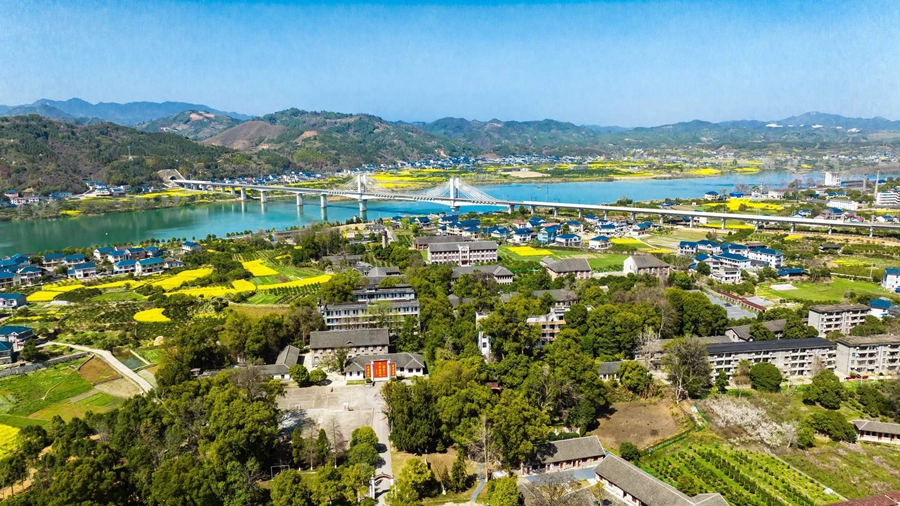
(The Anjiang Agricultural School Memorial Park across the river from the Gaomiao Site, where Academician Yuan,
a recipient of Medal of the Republic and the “Father of Hybrid Rice”, has been engaged in teaching and research
on hybrid rice for 37 years, successfully cultivating hybrid rice.)
At the “Hybrid Rice Memorial Hall” in the Anjiang Agricultural School Memorial Park, a photo of carbonized rice grains is particularly eye-catching. This is the carbonized rice grains excavated by archaeologists on site at that time. These grains are 7,400 years old, and their appearance also traces the history of Chinese civilization back to 7,800 years ago.
The excavation of the Gaomiao Site has unraveled a period of dusty history and reproduced scenes of prehistoric religious worship. It is a precious material for studying the food structure and agricultural origins of ancient ancestors, and has found a valuable “key” to reveal the origin and evolution of prehistoric agricultural civilization in the Yuanjiang River Basin.
He Gang, former director and second level researcher of the Hunan Provincial Institute of Cultural Relics and Archaeology, who led the excavation of the Gaomiao site, introduced that carbide grains were discovered in the Gaomiao culture 7,400 years ago, and the starch grains and lotus seeds were found on the stone tools of the ancestors of Gaomiao. This reflects the food source of the people at that time, and collection and hunting were the main ways of survival.
According to data, the famous Hemudu culture at home and abroad dates back about 6,800 years, Yangshao culture about 7,000 to 5,000 years, Liangzhu culture about 5,300 years, and Gaomiao culture back to 7,800 years. What is the significance of this for the origin of Chinese civilization?
“The Gaomiao culture holds an important position in the origin and development history of Chinese civilization,” added He Gang. Many innovations and inventions of the ancestors of Gaomiao culture constitute the core elements of the origin of Chinese civilization and are closely related to the origin of Chinese civilization. Many signs indicate that the Gaomiao Culture distribution area centered around the Yuan River Basin is likely to be an important birthplace of Chinese civilization.
He Gang introduced that the earliest white pottery products, a large number of aquatic and terrestrial animal remains, and various artificial objects unearthed from the relics also reflect the understanding of astronomy, calendar, art composition, and other images of the ancestors of Gaomiao culture. It can be regarded as an artistic classic and intellectual treasure trove of prehistoric humans in China.
It can be said that the Gaomiao Site presents a rich social form of prehistoric agricultural civilization, showcasing the diligence and wisdom of ancient working people, and greatly enhancing national cohesion and creativity.
The “Huitong in New Vision” in the hometown of Emperor Yan confirms that rice farming culture has a long history in Huaihua.
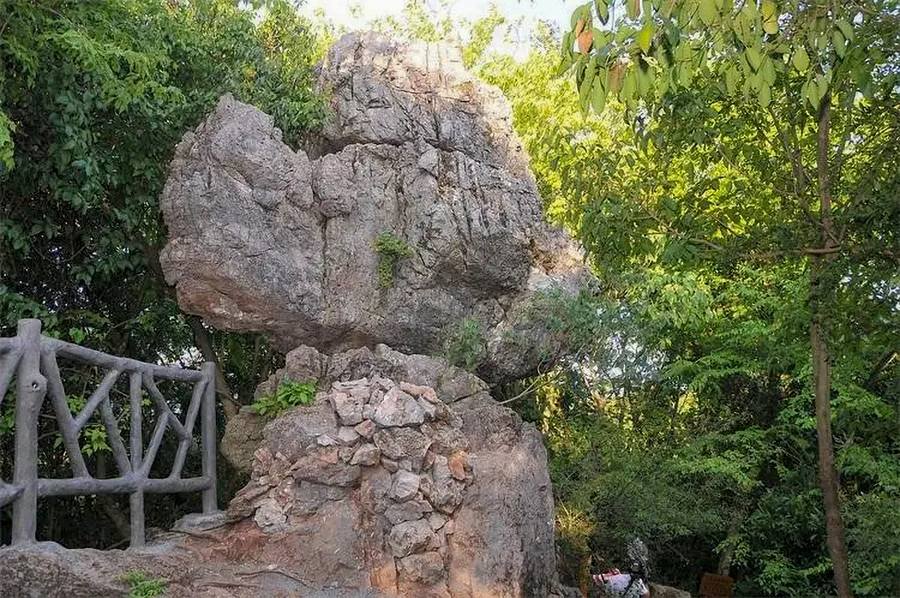
(The archaeological discoveries of rice farming cultural relics from Hongjiang’s Gaomiao, Jingzhou’s Zhupeng, and Zhongfang’s Gaokanlong in the surrounding area confirm the footprints of Emperor Yan’s family, centered around Lianshan, continuously developing towards the surrounding areas)
Crossing the long river of history, Huaihua’s rice culture is not limited to the Gaomiao culture.
At the beginning of the 21st century, China sparked a “Yan Emperor fever”, with the most eye-catching “Tongtong in New Vision” about the hometown of Yan Emperor , which is proposed by scholars of Huaihua.
The scholars have found evidence from ancient place names, landforms, and archaeology to support the founding ancestor of the Chinese nation.
In Tongtong, 10 new and old stone relics were discovered. Archaeological discoveries have shown that ancient people lived and multiplied in the area of Tonglianshan from 50,000 to 100,000 years ago. By the time of Emperor Yan, cooking smoke had already spread throughout the area and a high level of civilization had been achieved.
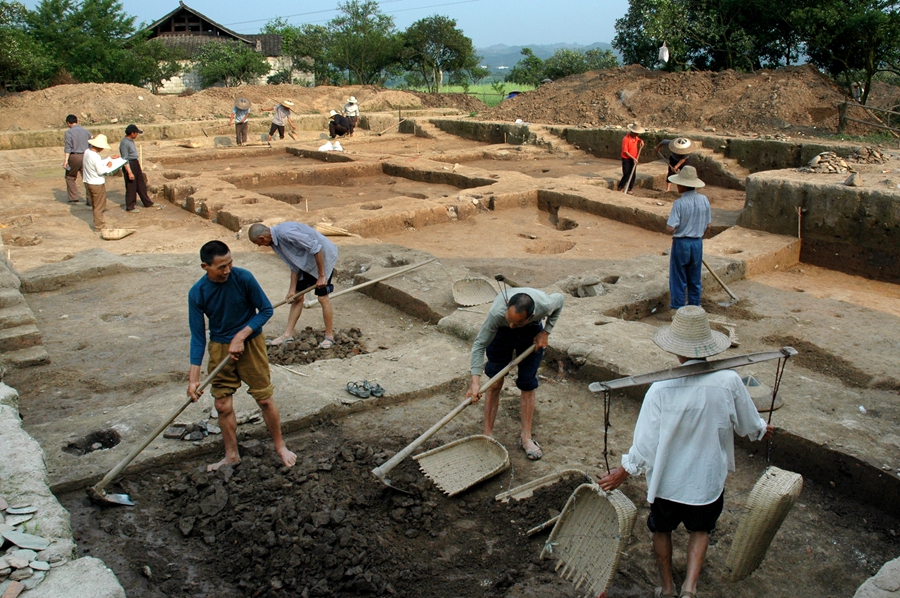
(Carbide grains were discovered in the Gaomiao culture 7,400 years ago, and the starch grains and lotus seeds were found on the stone tools of the ancestors of Gaomiao, reflecting the food sources of the people at that time.)
The archaeological discoveries of rice farming cultural relics from the Hongjiang’s Gaomiao and Jingzhou’s Zhupeng sites in the vicinity, as well as the Gaokanlong site in the Chinese side, confirm the footprints of Emperor Yan’s continuous development towards the surrounding areas with Lianshan as the center.
According to historical records, Emperor Yan contributed to the establishment of the “Ten Great Achievements” of rice farming culture in Chinese history. Nowadays, in this mysterious land of Huitong, relics of these achievements can be found.
During a joint interview, the reporter found that the ancient worship of the Yan Emperor still exists here.
After the annual autumn harvest in some villages, in order to express gratitude to the Yan Emperor for their blessings of abundant grain and the prosperity of the six livestock, and pray for a good harvest in the coming year, it is arranged during a night with a full moon, located in the “Binsui Pavilion” outside the village. Men aged 16 and above in the village participate in sacrificial activities, offering “chicken, fish, pig legs” and newly harvested grains such as rice and corn, as well as fragrant paper.
In Chinese history, the birth of Emperor Yan has always been a dispute between the North and the South. Through thousands of years of debate and research, the “Southern Vision” of the birthplace of Emperor Yan has increasingly been recognized by most experts and scholars. However, for many years, the vision has not had a specific carrier, and many scholars have been tirelessly searching for the traces of ancient Yan Emperor across the country.
For the birth place of Emperor Yan, “Huitong in New Vision” filled the gap in the “Southern Visions”. Wang Zhenzhong, Deputy Director of the Academic Committee of the Chinese Yan Emperor Research Association, believed after an inspection in Huitong that “the evidence for the vision of Huitong as the hometown of Yan Emperor is sufficient, and it can be a credible statement.
In response, experts have synthesized a series of archaeological evidence such as the Hongjiang’s Gaomiao Site and made a bold assumption: between 5,000 and 10,000 years ago, the Yan Emperor’s clan was a tribe that invented rice farming in the Dongting Lake area. About 5,000 years ago, the Yan Emperor led their troops down the Yuanjiang River, using the Dongting Lake shore as a starting point, and crossed the Dongting Lake for a northern expedition. Later, he became the leader of the military alliance of various tribes in the world, including the Central Plains region.
Further research is needed to determine whether the “Tongtong in New Vision” as the hometown of Emperor Yan is ultimately established. Furthermore, the long history of Huaihua’s rice farming culture is an undeniable fact.
Yuan Longping invented hybrid rice benefiting the entire world.
For the Dong people’s Red Rice Planting Base in Xinhuang Dong Autonomous County, the golden rice grows promisingly, with a gentle breeze blowing on the face, and the air and water vapor mixed with the fragrance of rice flowers, making people fresh and comfortable.
In Xinhuang’s Dong towns, this red rice grain has a history of thousands of years. It is not only a nutritious delicacy, but also included in the second batch of China’s Important Agricultural Cultural Heritage List by the Ministry of Agriculture and the National Geographic Indication Product Protection List.
The autumn brings a refreshing breeze. At the foot of Xihuang Mountain, the highest peak in Zhijiang Dong Autonomous County, there are thousand hills of terraced fields. The golden rice spreads from the foot of the mountain to the mountainside, as if wrapping a golden apron around the green mountains. The rice ears droop low, swaying in the wind, and the fragrance fills the air.
A part of soil and water nourishes the native people, making a quality “rice”. The rice produced here is as fine as a slender waist and clear crystal, and as white as curd when boiled. It is moderately soft and hard, with a delicious fragrance. It is locally known as “jade waist rice” and was once a tribute to the imperial court throughout history. Shen Congwen, a regional writer, accounted in Several Counties in the Upper Reaches of the Yuan River that “Zhijiang... produces a quality rice again, and there is a special type of jade waist rice at the foot of the XihuangMountain, which takes up another half length when cooked.
Farming prioritizes seeds. For thousands of years, the hardworking and wise people of Huaihua have never stopped exploring rice seeds, and have engraved a magnificent picture of the surging forward of rice farming civilization.
If the Gaomiao site and the Yan Emperor have unraveled the mysterious veil of rice farming culture on the land of Wuxi, Academician Yuan’s arduous exploration on this land is the historical inheritance of human rice farming civilization.
Coincidentally, the Anjiang Agricultural School Memorial Park, located across the river from the Gaomiao Site, is home to Academician Yuan, who has been teaching and researching hybrid rice for 37 years. He has successfully cultivated hybrid rice and down-to-earth made scientific and technological accomplishments on the land of his motherland, telling the legend of “One Seed Benefits the World”.
From three-line method, to two-line method, to super hybrid rice, from 700 kilograms to 800 kilograms, to 900 kilograms, to 1000 kilograms, the research on hybrid rice has spanned half a century. Every progress is a miracle.
The successful development of hybrid rice not only stems from Academician Yuan’s sincere intention to maintain national food security, but also comes out of “paradise of species variation” with special climate and geographical conditions.
“Academician Yuan’s research and cultivation of hybrid rice in Anjiang has its roots,” added He Gang. Anjiang and other places in Hongjiang City are located south of the Yangtze River Basin, with a relatively warm and humid climate that is suitable for rice growth.
Throughout the past and present of “One Seed” in Huaihua, the rice culture is profound and long-lasting, embodying the wisdom and effort of the descendants of Wuxi area. They have created a glorious past on this vast land and are also continuously striving to embark a better future.
(Translated by Tian Xia)