
Report on the Work of the Government
Delivered at the Fourth Session of the Sixth Huaihua Municipal People’s Congress on December 26, 2024
Li Chunqiu, Mayor of Huaihua
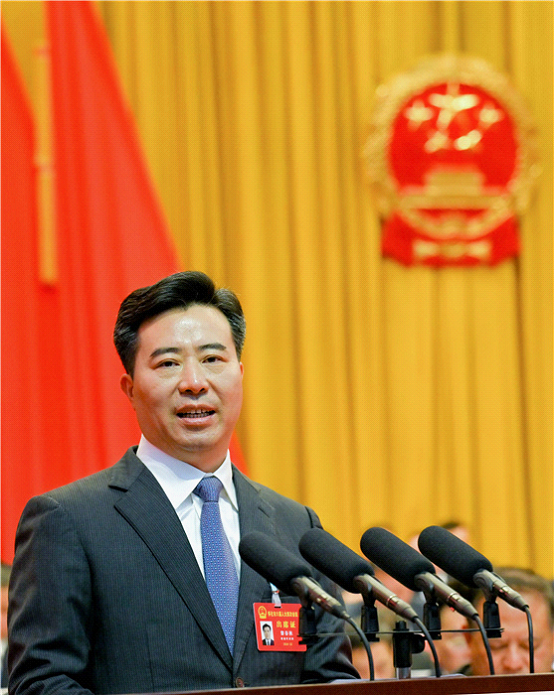
Li Chunqiu delivers the report on the work of the government. (Photo by Pan Yu/Huaihua Daily)
Fellow deputies,
On behalf of the People’s Government of Huaihua City, I will now report to you on the work of the government for your deliberation and approval. I also invite comments from members of the Huaihua Municipal Committee of the Chinese People’s Political Consultative Conference (CPPCC) and other attendees.
Review of the work during 2024
Our work in the outgoing 2024 has been exceptionally challenging, and our achievements have been hard-won. In the face of the complex and severe situation, we have adhered to Xi Jinping Thought on Socialism with Chinese Characteristics for a New Era as our guiding ideology. Under the strong leadership of the CPC Huaihua Municipal Committee, we have deeply studied and implemented the spirit of the 20th CPC National Congress, the second and third plenary sessions of the 20th CPC Central Committee, and the important speeches and instructions made by General Secretary Xi Jinping during his inspection in Hunan. With the implementation of the Three Highlands and Four New Missions Strategy and the Strategy of Five New Missions and Four Orientations, we have forged ahead with resolve, achieving a GDP growth of 5.2% (projected figure, similarly hereinafter), an industrial value-added output growth of 9.5%, fixed asset investment growth of 10%, a retail sales growth of social consumer goods by 6%, a local general public budget revenue growth of 2.2%, and a per capita disposable income growth of 5.2% and 7% for urban and rural residents respectively, marking a new stage of high-level openness and high-quality development.
Total economic volume exceeded 200 billion yuan.
Huaihua International Port handled 1,009 freight trains, achieving the provincial target two years ahead of schedule, with the China-Laos train service ranking first in train operation volume among the central region.
The total import and export volume reached 13 billion yuan, maintaining the highest growth rate in the province for 10 consecutive quarters.
Successfully held the 11th Global Forum for Hunan Entrepreneurs, with signed projects accounting for one-third of the provincial total.
Being listed as one of the first national pilot areas for the value realization mechanism of ecological products, the only one in the province.
The cultural and tourism IP of “Blessed Huaihua” and “World Rice Capital” has gained significant popularity. The city will host the 5th Hunan Tourism Development Conference.
The brand “Huai Xiang Huai Pin” of local agricultural produces was announced in Beijing, with local specialties dazzling the market.
The first international standard for Traditional Chinese Medicine: Poria was released, with Huaihua drafting ISO standards for two medicinal herbs in Hunan.
The construction of Anjiang Industrial Park for Crop Molecular Design and Breeding kicked off, promoting the city’s aim to be the International Seed Capital.
Chenzhou Mining Co., Ltd. has been listed as a national champion enterprise in the manufacturing industry, marking Huaihua’s breakthrough in nurturing a national champion enterprise.
In 2024, we accomplished the following tasks.
First, we adopted multiple measures to expand domestic demand and stabilize growth to ensure the economic operation was stable and improved. We fully implemented the national and provincial policies for stabilizing growth, executing the “1+8” plan across eight major actions. By adhering to the principle of “three observations, three evaluations, and three comparisons”, the city assigned municipal leaders to monitor the economic operation status and its economy maintained good growth momentum. We led the province in investment expansion by executing 51 provincial key projects and 355 municipal projects, achieving annual investment growth rates of 13.6% and 14.5% respectively, and securing the highest growth rate for fixed asset investment in the province. We obtained 11.12 billion yuan of state budgetary funds to implement major national strategies and build up security capacity in key areas and promote a new round of large-scale equipment renewal and trade-in of consumer goods. Investments in ten major infrastructure and industry projects exceeded their annual targets by 10% and 3% respectively. Investments in industry, manufacturing, high-tech sectors, and private investment increased by 10%, 18.9%, 35.2%, and 13.2% respectively. The Yuanling-Chenxi Expressway was open to traffic, and SANY Sanitation Equipment Production Base, Jiongcheng New Materials Base, and Zhongfang Power Equipment Distribution Industrial Base were established. We hosted 1,052 consumption-promoting events, creating new consumption hotspots. The sales of trade-in of automobiles and home appliances exceeded 1.6 billion yuan, while new energy vehicle sales surged by 52%. The city’s tourism development conference has improved the profile of Huaihua Tourism “Golden Triangle” and non-tangible cultural heritages and fostered new consumption trends, adding four new provincial night consumption demonstration sites. The revenue from accommodation, catering, and retail industries grew by 10%, while goods sales of units above designated size increased by 25%. Hecheng has been recognized as a leading county for commercial development at the national level.
In 2024, considerable achievements were made in investment attraction. The city hosted the Global Forum for Hunan Entrepreneurs and launched the “Investment Attraction Year” campaign, introducing 67 projects worth over 1 billion yuan and 39 projects from three categories of top 500 enterprises, setting new historical records. A total of 148 new enterprises were registered by Hunan-born entrepreneurs returning home, while 32 new foreign-invested enterprises were established, increasing the number of foreign trade enterprises with actual performance to 300, reflecting a growth of 40%. Domestic actual funds from other provinces amounted to 83 billion yuan, an increase of 20%, and the actual use of foreign investment was 55 million US dollars. We enhanced financial stability and revitalized economic vitality. Huaihua was listed as a national pilot city for industry-finance cooperation. The balance of various loans from financial institutions increased by 9%, with a loan-to-deposit ratio of 71.8%. Loans to technological, manufacturing, and small enterprises grew by 42%, 30%, and 28% respectively. Effective financial measures led to a 0.19 percentage point decrease in the non-performing loan ratio of the banking sector. The weighted average interest rate of financing platforms fell by 54 basis points. Premium income and claims paid increased by 4.3% and 7.9% respectively. The Wuxi Industrial Fund officially commenced operations, and three new companies were added to the provincial listing reserve resource pool.
Second, we built a first-class international land port with high standards and supporting platforms. The comprehensive transportation development plan for the land port and its overall planning have been completed. In 2024, the land port witnessed the upgrading of the gantry cranes at the western cargo yard, commencement of the construction of dedicated railway lines and supporting projects. The main section of the Huaihua-Zhijiang Expressway and Kangning Road opened to traffic, while the Land Port Avenue underwent renovation. The railway coding for the international land port was approved. The supporting projects for the ASEAN Industrial Park have been completed and put into use. The application for the comprehensive pilot zone for cross-border e-commerce has been expedited. The overall operational efficiency of Huaihua International Land Port has been improved, with the cargo throughput exceeding 8 million tons, marking a 22% increase. A round-the-clock appointment customs clearance system has been implemented, establishing a green channel for customs clearance. Service models such as “Railway Fast Track” and “Direct Loading and Pickup” have been continuously expanded, and the one-bill coverage system for multimodal transport has been fully promoted. Beigang Logistics Co., Ltd. and Beibu Gulf International Intermodal Transport Development Co., Ltd. established terminals in Huaihua. The land departure port tax refund policy has been implemented, and railway freight rates for cold chain logistics under China Railway Kunming Bureau have been reduced. With expanded cooperation, Huaihua opened seven cross-border logistics corridors and 152 international and domestic transportation routes, covering 46 countries and regions and 117 ports. The city set up five overseas warehouses in Thailand and Laos, and its trade with African countries grew by 72% in 2024, ranking second in the province. It launched the “direct train” for supplying fresh agricultural products to Hong Kong as well as the inaugural “Land-Sea New Corridor + China-Laos” connecting train service from Zhanjiang to Huaihua to Vientiane. The “Three-Province Agreement” has added four new source cities, including Wuhan and Shangrao, with a 146% increase in container shipments, and the first Yichang-Huaihua-Qinzhou Port rail-sea intermodal train has been launched. Additional connecting trains from Yueyang to Huaihua to ASEAN countries have been added. New air routes from Zhijiang Airport to Chengdu and Quanzhou was opened.
Huaihua International Land Port Company was recognized as one of the first batch of 3A land port enterprises in the country. The port-neighboring industries have sustained strong momentum for growth, with 129 enterprises in the luggage and leather goods industry exporting their products to 26 countries and regions, registering an 83% surge in export value, which helped establish Huaihua as the International Capital of Luggage within a year. Eight green food enterprises including Dewei, Huai’en and Changqing settled in. The import of cassava reached 70,000 tons, an increase of 317%. The Dekun secondary distribution center and the SF regional distribution center commenced operations, the construction of the smart cold chain digital logistics park and the Yiyatong supply chain integration base was completed. The land port delivered the regular Kunming-Huaihua cold-chain freight trains, the Thailand-Huaihua durian freight train, and the China-Laos-Thailand tropical fruit cold-chain freight train. Fifteen enterprises, including Alibaba International Station and Hunan Chiniu, settled in the land port (cross-border) e-commerce industrial park. The transaction volume of cross-border e-commerce increased by 80.3%, ranking first in the province.
Third, focus on building a “5+10” modern industrial system, we strengthened the foundation of the real economy and promoted its rapid development. The advanced manufacturing industry formed a strong cluster. We continued to extend, supplement and strengthen industrial chains, accelerating the cultivation and development of new quality productive forces. The number of industrial enterprises above designated size surpassed 1,000, with the added value of the manufacturing sector increasing by 11.5%. The city attracted 50 supply chain enterprises of the new display industry and enterprises in the traditional Chinese medicine industry such as China Resources Sanjiu Medical & Pharmaceutical Co., Ltd., Shenogen Pharma Group and China State Farm, with 77 projects being implemented. The bamboo industry had 27 enterprises above designated size, with one new national leading enterprise in forestry and two provincial bamboo industry demonstration parks. Products from companies like Yi’ou, Chenming, and Rongjing are selling well in Europe, America, Japan, and South Korea. A total of 104 projects, including Daika New Energy Vehicle Energy Storage Material Production Line Project and Yuanyi Microelectronics Project, were put into production.
In 2024, the city added one state-level specialized and innovative “little giant” firm, two provincial-level “sector champion” manufacturing enterprises, 45 provincial-level specialized and innovative small and medium-sized enterprises, two provincial-level manufacturing benchmark enterprises, and two billion-level industrial enterprises. Xupu was selected as a national model county for quality construction. The construction of Five-Standard industrial parks was steadily advanced. The average technical and trade income per mu in the parks increased by 10%, and the added value of industrial enterprises in the parks grew by 10%, accounting for 65% of the total added value of industrial enterprises. The adjustment of industrial parks was completed. Huaihua Hi-tech Industrial Development Zone was listed among the top 100 specialized and innovative hi-tech development zones in the country. Hongjiang Hi-tech Industrial Development Zone was selected as a typical case for promoting new industrialization by the Ministry of Industry and Information Technology. 22 new enterprises settled in the Yuxu Industrial Park. The production value of the Xinhuang Chemical Park surpassed 3 billion yuan. Companies like Xiangwei and Lanbo Chemical turned losses into profits. Enterprises such as Juntai Technology, Zhengxiang Technology, Xiangtong Industry, and Yuanling Sauce Wine are thriving.
Cultural tourism has gained prominence and distinction. The new tourism pattern accelerated its construction, with three new 4A scenic spots, one provincial-level tourism resort, and two provincial-level night-time cultural and tourism consumption aggregation areas. The agricultural cultural tourism brand “One Seed Changes the World” has gained strong visibility, with tourist arrivals and total tourism revenue increasing by 9% and 10% respectively. Tourism projects in the Tourism Golden Triangle, such as the Hybrid Rice Museum and the Gaomiao Ruins Museum, have opened to the public. The construction of projects for the Fifth Hunan Tourism Development Conference, including the Waterway Tour of the Wushui Corridor, the Tianwen Island Qu Yuan Cultural Park, and the Yushuwan Cultural and Tourism Business Complex, have been accelerated. The traditional Gaomiao dragon boat race has gained widespread attention, with star concerts, countryside basketball matches, and ethnic festivals actively taking place. The Hunan Red Tourism Cultural Festival and the Provincial Rural Cultural Tourism Festival have been successfully held.
The productive service industry developed rapidly. Twelve new A-level logistics enterprises were established, along with 2,806 trucks over 4.5 tons. The number of commercial circulation enterprises above the designated size has exceeded 1,000, and the total logistics costs for society decreased to 14.6% of GDP. The construction of the metal surface treatment center project was accelerated. In 2024, Huaihua was home to 146 inspection and testing institutions and 23 intelligent manufacturing enterprises; 4,895 enterprises moved to the cloud and 313 on platforms; a total of 1,489 new 5G base stations were built; and the added value of core industries in the digital economy accounted for 8% of the city’s GDP. Xinhuang County was recognized as a national demonstration county for the development of the digital economy. The construction of the legal affairs section of the Huaihua International Land Port was accelerated, and the “4+N” mechanism of foreign-related rule of law was preliminarily established.
Fourth, great efforts were made to facilitate the coordinated development of Hecheng District and Zhongfang County and urban construction. The built-up area of the central urban area reached 90.1 square kilometers, with a planned resident population of 915,000. Urban planning continued to be optimized, and the overall land use plans at both the municipal and county levels were approved. Five specific plans related to Hecheng-Zhongfang integrated development and educational facilities were developed. The preparation of 16 additional specialized plans focusing on water resource protection, utilization, and historical and cultural preservation was accelerated. Urban functions have been enhanced. The G209 project connecting Gaoyan Road and Yazuiyan has been completed, and Liutang West Road and Yuanjiang Road have been opened to traffic. Upgrades and renovations have been executed on 20 roads, including Hongxing South Road, Tianxing Road and Dangui Road. The Tunjie Second Bridge and the Xiniutang Bridge have been rebuilt. A new and upgraded water supply network has been established, covering 20 kilometers, achieving unified water supply in Hecheng District and Zhongfang County. Thirteen projects for power supply at 35 kV and above have been completed, and 1,249 households have undergone conversion to individual household power meters. Additionally, 41 new public charging stations and 385 charging piles have been installed. The Runyue Wyndham Hotel has officially opened, and the Adventure World of Wuxi Cultural Plaza has opened to the public. 17 livelihood service circles and 10 15-minute radius livelihood service circles have been established. New headway has been made in urban governance. A total of 55,000 square meters of illegal buildings have been demolished, and comprehensive rectification of the south high-speed rail station has been completed. Upgrades have been made to 104 alleyways, and 3,700 accessible ramps and crash barriers have been installed. 3,050 parking spaces have been created in the main urban area, and 4,260 spaces have been upgraded with smart technology. 20 urban lighting facilities have been upgraded. Four urban parks have been built, and 15 greening enhancement projects were implemented, increasing 11.5 hectares of green space. Renovations have been carried out on 24 environmentally friendly public restrooms and 10 garbage transfer stations. Improvements in flood management have been made at Shimen Market and Taipingqiao Market. The smart city management platform for “Three Districts and One County” has achieved a one-time completion rate of 86%. A total of 738 public service items have been streamlined for integrated processing.
In 2024, the urbanization rate in the city has reached 50.64%, with counties’ GDP accounting for 74.6%. Adjustments to the administrative divisions of some township-level areas in Hecheng District and Zhongfang County have been largely completed. Xinhuang, Jingzhou, and Tongdao have been recognized as advanced counties for economic development at the provincial level, while Xupu has been rated as an innovative county for economic advancement. Mayang, Xinhuang, Zhijiang, and Hongjiang have been designated as provincial-level demonstration counties for integrated urban-rural passenger transport. A number of townships, such as Guanzhuang and Xiaoping, have been developing rapidly, with 4 national strong towns for agricultural industry and 14 provincial strong towns for agricultural industry.
Fifth, we have promoted the green and low-carbon development and accelerated the transformation of ecological resources into ecological value. Huaihua has been recognized as the only municipal-level pilot area for the Xianglin Carbon Bill program in the province. We have innovated 56 ecological financial products, with the balance of green loans reaching 42.5 billion yuan, marking a 34% increase. The collateral loans based on the Water Area Management Rights in Zhijiang and Water Extraction Rights in Mayang have leveraged nearly 2 billion yuan in water ecological value loans. Chenxi has been included as a pilot county for carbon trading projects related to soil and water conservation in the province. Jingzhou has established the province’s first platform for realizing the value of ecological products, achieving inter-provincial trading of forestry carbon credits for the first time. Tongdao has issued the province’s first carbon sink certificates for forest ecosystem services and forest carbon sink bills, the first natural asset portfolio in the province.
We have accelerated the shift to green development methods. The city realized 100% green power supply for the Global Forum for Hunan Entrepreneurs and set up its first national-level green industrial park. The number of new energy vehicles reached 21,000, representing a 53% increase. The area of green buildings in urban areas reached 1.561 million square meters, with 74% of newly constructed buildings meeting green standards. The main urban area achieved near-complete coverage of waste classification facilities, with a resource utilization rate exceeding 80%. The construction of the municipal solid waste transfer and sorting center was completed. Yuanling was selected as one of the first pilot counties in the national rural energy revolution. Hongjiang was designated as a provincial-level pilot county for the construction of green prefabricated rural housing.
We have accelerated the improvement of ecological environment and completed the annual rectification tasks assigned by central and provincial ecological environment protection inspections. 258 tasks concerning pollution prevention, remediation and eradication were completed. The city’s air quality ranked second in the province in 2024. All monitored water quality at national and provincial control points, as well as centralized drinking water sources at the county level and above, met standards. Comprehensive progress was made in the water environment management of Taiping Creek, and the rainwater and sewage separation project in Maoguchong was completed. The city safely utilized 100% of its polluted arable land, restored 366 hectares of exposed mountains and 711.5 hectares of mining areas, fully completing the tasks for land greening and soil erosion control. The section of the Wushui River in Hongjiang was selected as a typical case for the Beautiful Hunan initiative. The section of the Qushui River in Jingzhou was recognized as the provincial Beautiful Rivers and Lakes Excellent Case.
Sixth, efforts have been made to deepen reform and innovation for vibrant and dynamic high-quality development. 72 economic and social system reforms have been implemented. The comprehensive task of vitalizing idle state-owned assets has been fully completed, resulting in a reduction of 23 platform companies. The reform of zero-based budgeting has been initiated, and the registration and confirmation of natural resource rights have been advanced. The construction of rural property rights transfer and trading market system has been accelerating, with 16,500 mu (1,100 hectares) of land transferred. The reform of collective forest rights is progressing, with the experience of Yuanling, Xupu, Huitong, and Jingzhou being promoted throughout the province. We have been exploring the development of county-level data factor market and have developed the country’s first data product “Huangniubao” for rural revitalization, driving the listing of local specialties like Jietan Tea, sugar orange, mountain honeysuckle and rice paddy fish on the Shenzhen Data Exchange. In the evaluation of medical and health care system reform, Huaihua ranked fourth in Central China and second in the province. The provincial-level grassroots demonstration cooperatives have achieved full coverage. The administrative reform of municipal-level institutions is nearly complete, with six integrated law enforcement teams in emergency response and market supervision having successfully decentralized their powers. The market-oriented reform of sanitation services in the main urban area and the national pilot program for deepening the market entry of rural collective operational construction land in Zhongfang have been fully completed.
The “Low Operation Cost” effect has been evident in the city, with the number of business entities increasing to 413,000, a growth of 6.5%. The number of “Four-above” enterprises in the database reached 3,032, marking a 10.4% increase. Huaihua has been recognized by the Global Times as one of the “Most Attractive Cities for Investment” once again. The total amount of newly added tax cuts, fee reductions, tax refunds, and fee deferrals reached 860 million yuan. The interest rates on newly issued loans decreased by 40 basis points, reducing corporate financing costs by 210 million yuan. The city has been exploring the mechanism of “land supermarket + immediate commencement of construction”, with 31 land parcels offered for sale. The section of the natural gas pipeline from Mayang to Chenxi has been put into operation, and ENN Energy has been incorporated into the province’s unified pricing system, leading to a 13% and 8% decrease in production and residential gas costs, respectively. A full process flow for project approval has been developed, shortening approval times by 38%. Over 90% of high-frequency items can be handled in a one-stop approach. The first “Entrepreneur Day” event was held, distributing the third batch of 100 entrepreneur green cards. Regular “Sending Solutions” activities have been conducted, resolving 1,890 problems and challenges faced by local enterprises.
Significant results in collaborative innovation have been achieved. We have committed to synergizing innovation platforms, entities, and talent, with total R&D expenditure reaching 4.67 billion yuan, the second-highest growth rate in the province. The investment intensity was 2.4%, ranking fifth in the province. The city homes 27 new provincial-level technology innovation platforms, over 550 high-tech enterprises and more than 1,450 technology-based small and medium-sized enterprises. The number of high-value invention patents per ten thousand people reached 1.05, reflecting a 14.8% increase. The completion rate for technology contract transactions ranked first in the province, accounting for 7% of the city’s GDP. In 2024, we have achieved 240 million yuan in intellectual property pledge financing and issued 670 million yuan in credit loans based on the knowledge value of technology-based enterprises. We have established three Chief Expert Studios in collaboration with Huaihua University and Huaihua Vocational and Technical College, and unveiled the ISO international standard promotion center for traditional Chinese medicine and the mechanization workstation for hilly orchards under the Ministry of Agriculture and Rural Affairs. Zhongfang was selected as a national pilot county for building strong intellectual property rights, and Yuanling passed the provincial evaluation as one of the first batch of innovative counties.
Seventh, persistent focus on agricultural work to promote rural revitalization. Great efforts have been made to consolidate and expand poverty alleviation achievements. Dynamic monitoring and precise assistance have been provided to prevent 59,000 people from falling back to poverty, successfully eliminating poverty risks for 26,000 people, and stabilizing employment for 360,000 individuals who were previously impoverished. Agricultural loans reached 99.5 billion yuan, accounting for 40.7% of the total. The city implemented 336 employment promotion projects, which created jobs for 65,000 individuals. Mayang’s work-relief experience has been promoted nationwide. Xinhuang, Zhijiang, Huitong, and Jingzhou were recognized as advanced counties in the province for promoting rural revitalization strategies. Grain production has remained stable, with 4.616 million mu (about 307,733 hectares) planted and a yield of 1.965 billion kgs. The remediation rate for the prominent issue of converting permanent basic farmland to non-grain production reached 87%. The city added 354,000 mu (23,600 hectares) of high-standard farmland, created and improved irrigation areas of 172,000 mu (about 11,467 hectares), and reinforced 137 dangerous reservoirs. Agricultural machinery cooperatives were established in previously unserved townships. Chenxi was recognized as a provincial-level model county for the standardized management of small reservoirs.
Specialty agriculture of the city has been cultivated and strengthened. We developed 186,000 mu (12,400 hectares) of hybrid rice seed production, improved 172,000 mu (about 11,467 hectares) of citrus varieties, newly established and modified oil tea production over 255,000 mu (17,000 hectares), and added 178,000 mu (about 11,867 hectares) of traditional Chinese medicine. One national-level leading enterprise and 14 provincial-level leading enterprises in agricultural industrialization were newly established. The number of enterprises with output over 100 million yuan reached 21. The number of “Two Products and One Standard” (quality products with brand recognition) reached 308, with the brand value of Jietan Tea, Mayang Orange, and Qianyang Sugar Orange each exceeding 3 billion yuan. Huitong was included as a national pilot county for the promotion of ecological low-carbon tea. The deep processing industrial cluster for Poria in Jingzhou was recognized as a provincial-level characteristic industry cluster for small and medium-sized enterprises. Chenxi and Zhongfang were acknowledged as major counties for tea oil production in the province, and Mayang was listed as a pilot county for social services in the fruit industry.
Achievements have been made in building a beautiful and harmonious countryside. The “Five Commons and Five Beauties” model has been promoted throughout the region, with 19 new provincial-level beautiful villages established. The city has implemented 125 rural living environment improvement projects, completed the treatment of domestic sewage in 50 administrative villages, constructed 7 new rural garbage transfer stations, and achieved coverage rates for sanitary toilets and domestic sewage treatment at 94% and 44.5% respectively. The city has also maintained and repaired 968 rural water supply projects and renovated 655 unsafe rural houses. The rural power distribution network has been expanded by 3,200 kilometers, rural roads have been upgraded over 380 kilometers, and safety facilities have been added along 1,150 kilometers of roads. Huitong was recognized as a national demonstration county for maintaining rural roads. Hongjiang was honored as an advanced county in the national village cleanliness campaign, and Tongdao was recognized as a national model county for the protection and utilization of traditional villages.
Eighth, efforts have been made to enhance the well-being of the people to make happiness tangible and accessible. Public welfare expenditures accounted for 79.3% of the city’s budget. Key public welfare projects at the provincial and municipal levels have been completed. 37,000 new urban jobs have been created and 41,000 rural workers have been transitioned into the cities for employment. The city’s urban surveyed unemployment rate stood at 5.4% and achieved zero case of families with no adult working. The employment rate for graduates who have left school but have been unemployed upon graduation achieved 97.1%. A human resources service center at the Huaihua International Land Port has been established, providing online and offline services to 2 million workers. The reform experience of human resources service stations has been selected as a China’s Annual Reform Case for nationwide promotion. The Land Port innovation and entrepreneurship incubation base became the home of 40 entrepreneurial entities. Huitong was recognized as a model county for rural entrepreneurship in the province. Public education has achieved balanced development. 36 public schools and kindergartens have been newly set up, adding 31,000 student places. 22 standardized boarding schools have been established in rural areas, along with 14 “Xu Teli Project” high schools and 8 schools for the elderly. Huaihua Vocational and Technical College of Commerce began to enroll students, and the third phase of Huaihua Normal College relocation project completed. The reform of group-based education has been advancing, with 3 educational groups and 4 educational clusters established. 74 schools have received support from prestigious schools in Changsha. The “Double Random Class Assignment” policy for transparent admissions has been effectively implemented, and experience in implementing the Double Reduction policy has been introduced to other cities. Zhongfang was recognized as a national experimental zone for collaborative education among schools, families, and society.
Medical and health care standards have been improved. We have actively engaged with Xiangya Hospital of Central South University to implement support policies, achieving initial progress in the construction of national key clinical specialties. 51 medical alliances and 17 specialty alliances have been formed, with 4 county-level medical sub-centers developed. The construction of a pilot zone for comprehensive reform of traditional Chinese medicine has been promoted, with the Municipal Traditional Chinese Medicine Hospital passing the re-evaluation for Class A tertiary hospital and being included in the national pilot for intervention in scoliosis among children and adolescents using traditional Chinese medicine. We have pioneered the establishment of a municipal Health Information Platform, allowing for mutual recognition of inspection and test results for 70,000 people. Solid and effective social security measures have been implemented. The medical insurance coverage rate reached 96.2%, with payments totaling 5.88 billion yuan. Urban and rural subsistence allowances have been disbursed, totaling 550 million yuan, with increases of 7.6% and 8.9% respectively. The increase in pension benefits for urban and rural residents ranked first in the province. The city has been the first in the province to explore “open-door” operations for elderly care institutions, completing age-friendly renovations for 2,631 households and adding 310 nursing beds in public elderly care institutions, along with 3,364 inclusive care spots. The city’s mental health rehabilitation center has commenced operations. Renovations were completed for 355 old urban communities and 836 old and dilapidated houses, and all guaranteed rental housing projects were fully underway. The issuance of mortgage loans and withdrawals from the housing provident fund reached 2.97 billion yuan, with processing times reduced by 73%. Rehabilitation assistance was provided for 1,265 disabled children, and 2,630 households with severely disabled individuals underwent barrier-free renovations. Xupu was listed as a national pilot county for service-oriented social assistance.
Vibrant cultural and sports development has been achieved. The protection for the project of the Gaomiao Relics has kicked off. Two new national second-level museums and two national-level cultural heritage projects have been established. Zhijiang was recognized as a national historical and cultural city. The celebration of the 70th anniversary of the establishment of Tongdao Dong Autonomous County was successfully held. Huaihua Community Performance Competition was recognized as a typical case of China’s mass cultural activities, with the Yang Drama performance Yao Embroiderer winning the Tianhan New Play Award at the 8th Hunan Arts Festival. The Workers’ Cultural Palace was opened to the public. The municipal team won two first prizes at the 12th National Traditional Games of Ethnic Minorities. Over 400 events were held in the city, including the first national original ethnic dance competition, the national U21 youth basketball tournament, and the “Book Mountain Cup” square dance competition. The Xiaoxiang Dragon Dance Festival was recognized as an excellent project in Chinese sports culture.
A harmonious and stable social environment has been maintained. The city has implemented 59 measures to ensure safety production, achieving a double decrease in the number of accidents and fatalities. Measures have been taken to effectively respond to 10 rounds of heavy rainfall. Intelligent forest fire prevention measures have been effectively implemented. The provincial emergency rescue center in Huaihua has been operational. The safety situation for road traffic and fire prevention has remained stable, and food and drug safety regulation has been strengthened. Tasks to ensure the delivery of housing and properties have been fully accomplished, with a total of 84,000 certificates issued. Ongoing efforts against organized crime, the “Sword Guarding Buds” special action, the people’s war on drugs in the new era, and the crackdown on telecom and internet fraud have yielded significant results. The “Three Sources” co-governance model has continued to deepen, with grassroots comprehensive governance centers operating in a standardized and tangible manner.
Over the past year, we have comprehensively strengthened the construction of government itself, deeply engaged in Party discipline learning and education, and normalized the education of Party members and cadres within the government system to understand and abide by discipline. We have adhered to the principle of promoting reform and governance through case studies, firmly implemented the “dual responsibilities” of Party conduct and clean government, and effectively maintained a clean and upright political ecology. We have solidly advanced the construction of a rule-of-law government, making the respect, study, observance, and application of the law a norm. We have consciously accepted supervision from the Municipal People’s Congress and the Municipal CPPCC, strengthened audit and statistical supervision, addressed 244 suggestions from Municipal People’s Congress representatives and 439 proposals from the Municipal CPPCC members, implemented 7 resolutions and decisions from the Standing Committee of the Municipal People’s Congress, and cooperated in the formulation and revision of 3 local regulations. We have focused on improving administrative efficiency, reducing documents and meetings by 20% and 9% respectively, with a completion rate of 95.3% for government efficiency systems. We have maintained a tight budget, cutting non-essential expenditures by 200 million yuan to improve people’s livelihoods and support the development of market entities.
We have made solid progress in national defense mobilization and the construction of reserve forces. Services and support for retired servicemen have been continuously strengthened, with significant achievements in creating a national civil-military mutual support model. The results of creating a national demonstration area for ethnic unity and progress have been continuously consolidated. The fifth national economic census has been completed, and new achievements have been made in areas such as government affairs, religion, women and children work, the Youth League, work concerning meteorology and hydrology.
Fellow deputies,
In reflecting on the past year, we have earnestly studied and implemented the spirit of the series of important speeches and directives by General Secretary Xi Jinping. We have thoroughly understood the decisive significance of the “two establishments” and strengthened the commitment to the “two upholds”. Under the strong leadership of the Provincial Party Committee, Provincial Government, and Municipal Party Committee, we have made progress in implementing the Three Highlands and Four New Missions Strategy. The journey of our endeavors is inspiring, and the call of the times urges us to strive diligently. Over the past year, we have grasped the major trends, riding the waves of reform. We have established a comprehensive framework for deepening reforms, which has significantly built consensus and boosted confidence. The Municipal People’s Congress, the Municipal CPPCC, as well as their members, have safeguarded reform through the rule of law and supervision, uniting people’s hearts through solid performance in their roles. Various democratic parties and non-affiliated individuals have offered constructive suggestions and sought common ground for reform and opening up. As we set our course, our strides on the path of catching up are strong and steady. The whole city remains committed to prioritizing development and economic growth, with supply chain leaders meticulously planning and implementing precise policies. Business associations have played a vital role in connecting enterprises and bringing numerous industrial projects to fruition. Entrepreneurs have bravely taken the lead in the marketplace, resulting in rising industrial landmarks, as Huaihua thrives with momentum and vigor. The Global Forum for Hunan Entrepreneurs has showcased Hunan’s image and Huaihua’s characteristics. The international land port is making progress, with multiple reports from CCTV news broadcasts. The “Field Choir” performed at the Lunar New Year Gala, Paralympic athletes set new world records in Paris, and Hairstylist Xiaohua has become a sensation, making Huaihua famous far and wide.
Volunteers are at the forefront of aiding the vulnerable and driving innovation. Grassroots cadres are valiantly engaged in flood relief. Teachers, healthcare workers, and scientists work diligently and selflessly. Military personnel, armed police, law enforcement officers, firefighters, and reserve militia stand ready to protect our safety. Sanitation workers and small business owners rise early and work tirelessly. Couriers and food delivery riders navigate through streets and alleys. People from all walks of life strive for happiness and fight for their dreams, reflecting Huaihua’s vibrant and charismatic character. Hereby, on behalf of the Municipal People’s Government, I extend my highest respect and heartfelt gratitude to all of you!
Fellow deputies,
While acknowledging our achievements, we must also clearly recognize that the current economic and social development of the city still faces many challenges and problems. The main issues are as follows: growth momentum is insufficient, some indicators have not met expectations, and the economic growth momentum needs further consolidation; there are few leading enterprises with a significant impact, the presence of substantial industrial clusters is inadequate, and the specialization and refinement of industrial services are still relatively low; the impetus for innovation is not strong enough, there are few innovation platforms, leading to a relatively lagging development of new quality productive forces; there are still some shortcomings in improving people’s livelihood and considerable pressure in addressing local government debt issue; there is insufficient execution and creativity in implementing policies, and administrative efficiency needs further enhancement. We must face these problems head-on and tackle them with determination, striving to find solutions by all possible means.
Work Plan for 2025
The year 2025 marks the concluding year for the realization of the 14th Five-Year Plan, a year of active participation in the construction of the “Dual Channels”, and a critical year for advancing project development. Currently, the adverse impacts of changing external conditions are intensifying, international trade is becoming increasingly complex and severe, and domestic economic cyclicality is intertwining with structural contradictions. To facilitate Huaihua’s development, we must clarify our direction by adhering to economic laws, maintain of the centralized and unified leadership of the Party Central Committee as the fundamental guarantee for effective economic work, properly balance five critical relationships: ensuring steady progress while pursuing advancement, promoting stability through progress, upholding principles while innovating, addressing foundational issues before tackling others, and integrating systems while ensuring collaborative efforts. This will facilitate a high level of openness and quality development that is stable and sustainable. We need to seize strategic opportunities with confidence, implementing macro policies that are increasingly proactive and supportive of the real economy and supporting the construction of Huaihua International Land Port and the realization of ecological product value to be listed as major national strategies. As the host of the 5th Hunan Tourism Development Conference, Huaihua has built a “5+10” modern industrial system, promoted strong integration of Hecheng District and Zhongfang County and solidified the foundation for Huaihua’s development to open up opportunities and improve prospects. We must detail measures to implement major deployments, systematically align with the significant strategic decisions made by the Party Central Committee, the provincial and municipal Party committees, put more focus on boosting demand and industrial upgrading, facilitating reform and opening up, attracting investment, promoting coordinated development, and transitioning to a green economy. Practical steps must lead to project-oriented, itemized work, with clear responsibilities and timelines. In deepening reforms and innovations, we will invigorate our approach by ensuring that all reform measures are effectively implemented, continuously unleashing overall effects and maximizing efficacy. Tailored strategies will nurture and develop new quality productive forces, facilitating a smooth transition between old and new development drivers. We will demonstrate our commitment by meeting practical demands, emphasizing execution and effectiveness as the most distinctive features of government work. We will prioritize action, strive for improvement, drive economic growth, optimize structure, and foster a continuously positive development trend.
The overall requirements for government work are: to be guided by Xi Jinping Thought on Socialism with Chinese Characteristics for a New Era; to fully implement the spirit of the CPC 20th National Congress, the second and third plenary sessions of the 20th CPC Central Committee, and the Central Economic Work Conference, adhering to the general tone of seeking progress while maintaining stability; to comprehensively and accurately implement the new development philosophy, accelerate the construction of a new development framework, and solidly promote high-quality development, implementing the Three Highlands and Four New Missions Strategy and the Strategy of Five New Missions and Four Orientations; to deepen reform, expand high-level opening-up, establish a modern industrial system, and boost, promote the integration of technological and industrial innovation, mitigate risks in key areas, stabilize expectations, stimulate vitality, and support the economy’s sustained recovery. We will continuously improve the living standards of the people, maintain social harmony and stability, and achieve high-quality completion of the goals of the 14th Five-Year Plan, laying a solid foundation for a good start to the 15th Five-Year Plan.
Main expected goals for economic and social development: GDP growth of over 5.5%; industrial added value growth of over 7%, with the growth of the manufacturing industry over 8%; fixed asset investment growth of over 6.5%, with industrial investment growth of over 10%; total retail sales of consumer goods growing by over 6%; local public budget revenue increasing by over 3.5%; per capita disposable income for urban and rural residents increasing by over 5.5% and 7% respectively; the consumer price index rising within 3%; total import and export volume growing by over 20%.
Focus efforts on seven aspects:
1. Strengthen the construction of Huaihua International Land Port to enhance openness
We will build platforms, improve transportation channels, strengthen logistics hubs, and boost trade to achieve a higher level of integration in the construction of the new western land-sea corridor and the international land-sea corridor linking the Indian Ocean with southwest China with the aim of creating a more competitive inland highland for reform and opening up.
We will upgrade supporting facilities in port area, striving to list the Huaihua International Land Port as a national and provincial project; implement smart operations for the land port, accelerate the infrastructure construction in industrial parks for luggage manufacturing and cassava processing, and complete the construction of high-standard warehouses and container operation areas, including gantry cranes. We will facilitate inter-port transportation networks by expediting the construction of Ruyi Road and Chanye Avenue, and complete the development of multimodal transport transfer centers, dedicated railway lines, and other supporting projects. We will advance the construction of international grain logistics processing parks, Xinhuang Daxin intermodal logistics park, and Huitong Lianshan and Chenxi Lanbo dedicated railway lines.
We will intensify cargo collection efforts to ensure that local cargo accounts for 40% of total shipments, optimizing the inbound and outbound cargo ratio to 1.6:1. We will deepen collaboration among cities, exploring the creation of a national-level platform in partnership with Changsha and Yueyang. Seizing the opportunity to accelerate the rise of the central region in the new era, we will stabilize cargo sources from Hubei and Jiangxi while actively expanding sources from Anhui, Henan, and Shanxi. We will increase regular train services from Huaihua to Qinzhou Port/Guangzhou Port and strive to establish round-trip services between Huaihua and Qinzhou/Nansha. We will enhance cooperation with ports in Haiphong, Vietnam; Laem Chabang, Thailand; Jakarta, Indonesia; and Port Klang, Malaysia, opening cold chain intermodal transport from Vietnam and Laos to Huaihua, and freight trains from Huaihua to Singapore. We aim to handle over 1,200 international freight trains, including more than 200 trains on the China-Laos route and over 520 rail-sea intermodal trains.
We will deepen “point-to-point” customs clearance cooperation with ports such as Mengla, Pingxiang, Qinzhou, Dapeng and Nansha; implement facilitative customs clearance models; and promote the implementation of domestic railway freight rate reductions for the China-Laos freight train and seek further reductions in freight rates from China Railway Guangzhou Group ang Nanchang Group. We will push for the official operation of the Yiyaton supply chain integration base and integrate into the construction of a New Digital Land-Sea Corridor, promoting one-stop services for tax refunds and bank collections. We will actively apply for the establishment of a cross-border e-commerce comprehensive pilot zone and designated regulatory sites for grains, fruits, and meat. We aim to achieve the operationalization of the legal office of the Huaihua International Land Port.
We will reinforce the construction of an industrial system in line with local conditions, striving to create a cold chain logistics-focused international land port with an output value exceeding 100 billion yuan. We will accelerate the development of a luggage and leather goods industrial park, aiming to attract over 40 upstream enterprises and 40 large-scale enterprises, with an annual production of 10 million bags, 3 million exports, and an output value of 6 billion yuan. We will expedite the establishment of a green food industrial park, initiate Nahao Biotechnology project, and attract major enterprises such as Wanhao Wine. We will accelerate the construction of China Co-op Huaihua Agricultural Park, promoting the operation of e-commerce centers and exhibition areas. We will enhance the cassava processing industry by attracting at least two processing manufacturers and striving for a trade volume of 150,000 tons. We will expand and strengthen cold chain logistics, establishing a four-tier transportation system for international intermodal, provincial transfer, regional distribution, and urban-rural delivery; promote the official operation of a smart cold chain digital logistics park, upgrade logistics distribution centers for SF Express, Dekun, and Chuanhua, and strengthen cooperation with Hunan Agriculture Group and Changsha Hongxing Group to promote models such as cold chain cloud warehouses, joint distribution, and less-than-truckload logistics, adding 100,000 tons of storage capacity and operating 12 cold chain freight trains.
2. Accelerate industrial cluster upgrading to strengthen competitiveness
We will continuously enhance the integrity and advancement of the “5+10” modern industrial system.
We will focus on new industrialization by encouraging enterprises to adopt new equipment, promote new technologies, and develop new products. We aim to promote high-end development through equipment upgrades, and complete five key projects, including the equipment upgrades at Hengguang Technology and the smart manufacturing of SANY sanitation equipment, with over 100 companies involved in equipment updates, totaling an investment of over 2.6 billion yuan. We will foster high-end development through process upgrades, emphasizing the technological transformation of over 100 enterprises in antimony and gold smelting sector, with a targeted investment growth of over 12%. We will promote high-end development through product iteration, advancing key projects such as comprehensive processing and utilization of barite, Phase I of the China Barium Valley project, the Hongsheng special polymer materials industrial base, and the new energy smart sanitation equipment manufacturing base. We will encourage the research and production of high-value-added products like polysilicon and smart terminals, and support deep processing of fruits and camellia oil, as well as the development of high-quality, high-yield rice varieties. We aim to add one national-level specialized and innovative “little giant” enterprise and 30 provincial-level specialized and innovative small and medium-sized enterprises, with an annual output value growth of over 8.5% across ten key industrial chains.
Efforts will be made to accelerate digital transformation. We will further advance the “Smart Empowerment for Thousands of Enterprises” initiative, aiming for the core digital economy industries to account for over 10% of the city’s GDP. We will guide small and medium-sized enterprises to widely adopt new-generation information technologies and continuously conduct evaluations for the integration of industrialization and informatization and digital transformation maturity, targeting three enterprises being recognitions by the Ministry of Industry and Information Technology for digital transformation. We will establish ten provincial-level smart manufacturing enterprises and build an industrial internet platform, enabling 3,500 small and medium-sized enterprises to move to the cloud and 310 to join the platform. We will establish 300 new 5G base stations and accelerate the construction and application of key facilities such as cloud computing centers, integrated government big data platforms, and intelligent video integration and sharing platforms.
We will strengthen the leading role of major enterprises, supporting chain leaders like Xiangtong Industry Company and Wuxin Intelligent Equipment Company to assist smaller enterprises in the chain, guiding small and medium-sized enterprises in sectors such as luggage and leather goods and machinery to deeply integrate into the supply chain, focusing on the construction of the Xiangchen luggage production base. We will closely monitor weak links in the industrial chain, attract key enterprises such as Haiwang Group and Junxing Technology, advance projects in biomedicine, pharmaceutical production, and bamboo processing, fostering a new pattern of collaborative development in traditional Chinese medicine and bio-based industries. We will promote the optimization and integration of the Hecheng High-tech Zone, International Land Port Economic Development Zone, Zhongfang Industrial Development Zone, and Huaihua Hi-tech Zone, and guide enterprises in equipment manufacturing and food sectors to develop within the parks, with industrial added value from parks accounting for over 68%. We will strengthen policy guidance, increase support for specialty industries, and establish industry alliances and associations for bamboo products and electronic components, promoting bio-based industries to be included in provincial-level specialty industrial clusters. We will fully implement a new round of mineral exploration and coordinate the development of characteristic mining industries such as gold, silica sand, and barite, aiming to create a trillion-yuan green mining cluster.
With the focus on integrated development, we will solidly advance the “Integration of Two Industries” initiative by establishing research and design centers as well as inspection and testing centers for luggage, leather goods, and bamboo products. We aim to add one provincial-level service-oriented manufacturing demonstration enterprise, one industrial design center, and one pilot enterprise for “two industries integration”, and promote the production of the metal surface treatment center project. We will facilitate the deep integration of innovation chains, industrial chains, financial chains, and talent chains, launching a special plan for technological innovation and achievement transformation, supporting technology transfer and transformation at institutions such as Huaihua University, Hunan University of Traditional Chinese Medicine and Huaihua Vocational and Technical College. We aim to establish five technology achievement transformation parks, with technology contract transaction amounts exceeding 16 billion yuan. We will improve the multi-level financial service system, actively leveraging the Wuxi Industrial Fund to provide financial services tailored to ten industrial chains, targeting a loan balance growth of 30% for the manufacturing industry and 28% for small and micro enterprises. We will deeply implement the Wuxi Plan, ensuring that the work studios of chief experts in key industrial chains are fully covered.
We will uphold the principle of hosting conferences to invigorate the city and mobilize the entire city to successfully hold the 5th Hunan Tourism Development Conference, accelerating the establishment of a nationally first-class tourist destination. We aim to high standards in completing key cultural and tourism projects, continually developing the tourism “Golden Triangle” and further enhancing the cultural tourism brands of “Huaihua, the Blessed Land” and “A Seed Changing the World”. We will promote the integrated development of tourism in Hecheng District, Hongjiang District and Zhijiang County, support the application of Hongjiang Ancient Commercial Town for 5A scenic spot, Qianyang Ancient Town for the title of National Historical and Cultural City, Anjiang Agricultural Cultural Tourism Area for national-level tourism resort, Gaomiao Archaeological Site Park for National Archaeological Site Park, and Xuefeng Mountain Scenic Area for national-level mountain tourism resort. Additionally, we will support the applications of Zhonghua Shushan, Dayou Academy, Jingping Ancient Village, and Gaoyi Ancient Village for 4A scenic spot. We will promote tourism cooperation in the Zhangjiajie-Jishou-Huaihua region and the Xuefeng Mountain area, leveraging the rich assets of ancient, green, and red tourism resources to launch a series of cross-regional boutique routes, national festivals and events, and a variety of cultural and tourism products. Leveraging the “World Longevity Town” brand effect, we will accelerate the establishment of a cultural tourism and health care base in the Wuling Mountain area. Our goal is to achieve over 69.9 million visitors and more than 63 billion yuan in total revenue.
3. Expand effective demand to promote economic progress
We will focus on coordinating the development of domestic and external demand, creating a virtuous cycle of consumption, investment and foreign trade.
Vigorously tap into consumption potential. We will implement special actions to boost consumption, actively implement the “Two New” policies, and accelerate the establishment of regional consumption center. We will restart the construction of the Bubugao Central Square project and focus on advancing the development of business districts around the train station, sports center, and the high-speed train station. We will promote the completion and operation of projects such as the land port intangible cultural heritage experience area. We will deeply implement the “Intangible Cultural Heritage Lighting up Huaihua” initiative, inheriting intangible cultural heritages through digital technology. We aim to build a number of intangible cultural heritage districts, scenic spots, and villages and innovate the new model of cultural tourism consumption featuring “intangible heritage dissemination + intangible heritage experience + consumption conversion”. We will amplify the demonstration effect of cultural tourism consumption aggregation areas, support the development of new business formats such as e-commerce live streaming, instant retail, and smart restaurants, and achieve over 25% growth in public network commodity sales for enterprises above designated size. The city plans to hold over 800 events to promote the sales of local agricultural products, traditional Chinese medicine and delicacies and to continue to push for stabilization of the real estate market, fully unleashing the potential for rigid and upgraded housing demand. We will expand consumption in major categories such as new energy vehicles, electronic products, and smart home appliances and actively develop the first launch economy, silver economy and low-altitude economy.
Continuously Improve Investment Efficiency. We will vigorously carry out the “Project Construction Year” initiative. Early planning for major projects under the 15th Five-Year Plan will be prioritized, striving to include more significant projects in national and provincial plans. We will fully advance the construction of key provincial and municipal projects, completing investments of over 68 billion yuan, with a focus on ten major infrastructure projects such as the Wushui large-scale irrigation project and the Chenxi Pumped Storage Power Station project, and commence the construction of the Yuanshui Yutan navigation and hydropower hub project. Measures will be taken by the city to enhance the mechanisms for full-chain services, all-factor guarantees, and full-cycle management, promoting early signing of contracts, project commencement and production. Government investment will effectively drive social investment, guiding private capital to participate in the infrastructure construction, with private investment accounting for over 60%.
We will actively cultivate foreign trade entities and implement ten measures to promote high-quality development of foreign trade, achieving the goal of cultivating over 330 foreign trade enterprises with actual performance. We will expand markets in RCEP members, Africa and the European Union, and support companies like Dezhong Automobile, Helishi New Energy, and Tiantian Food to accelerate their overseas layout and other companies to develop foreign trade in luggage and leather goods, agricultural products, electronic information, and used cars, achieving a total import and export volume of over 15.6 billion yuan. The city will host the second Hunan (Huaihua) RCEP Economic and Trade Expo and actively participate in the China-Africa Economic and Trade Expo, the China International Import Expo, the Chain Expo, and the Canton Fair. We will promote the integration of cross-border e-commerce with industrial chains, actively develop service trade, green trade, and digital trade, and utilize foreign investment of over 50 million USD.
4. Continuously strengthen advantages and enhance ecological construction
We will actively carry out pilot projects for the national ecological product value realization mechanism, collaboratively promote carbon reduction, pollution control, and green growth, thereby enhancing the “green content” of ecology to increase the “gold content” of development.
Explore new paths for the transformation of the Two Mountains Theory. We will implement a three-year action plan for realizing the value of ecological products, regularly conduct GEP (Gross Ecosystem Product) accounting, and initiate annual assessments for pilot projects. We will deepen the registration of natural resource rights and accelerate the development of CCER (China Certified Emission Reduction) forestry carbon sinks, aiming to complete the first transaction. We will explore application for cultural tourism carbon credits and judicial carbon credits, gradually expanding the volume of Xianglin Carbon Bill. We will innovate green financial products in areas such as forest rights and water rights tailored to local conditions, aiming for a growth of over 30% in the balance of green loans. We will establish a compensation system for ecological damage and improve the cross-regional ecological compensation mechanism.
Accelerate the low-carbon transition of economic operations. We will implement the “dual carbon” strategy and expedite the comprehensive green transformation of economic and social development. We will utilize green technologies to upgrade traditional industries such as building materials, metallurgy, chemicals, and logistics, achieving a non-fossil energy consumption ratio of over 27% and meeting provincial targets for energy consumption and carbon emissions per unit of GDP. We will actively promote the construction of zero-carbon parks, leveraging enterprises like Dazhuang Bamboo Industry to create a green, low-carbon bamboo industrial park. All newly constructed urban buildings will fully comply with green building standards. We will enhance efforts in waste classification, accelerate the construction of the Huaihua North waste incineration power plant, and renovate eight waste transfer stations, achieving a 100% harmless treatment rate for urban household waste. We will develop a new energy circular economy and vigorously promote the establishment of green government agencies.
Combat pollution with determination. We will resolutely address issues raised by central and provincial ecological and environmental inspections, as well as feedback from the ecological environment warning videos related to the Yangtze River Economic Belt. We will continue to advance the battles to defend blue skies, clear waters and clean land, focus on eliminating heavy pollution weather, prevent ozone pollution, and control diesel truck emissions, ensuring that urban air quality stabilizes at national Grade II standards. We will vigorously address prominent drinking water source issues, particularly in the Shuishe River basin, ensuring that the water quality at all surface water monitoring points meets Class II standards or above. We will strengthen the management of soil pollution and agricultural source pollution. We will push forward the comprehensive management of the Taiping Creek water environment, implement urban rainwater and sewage diversion renovations, and focus on the construction of underground pipeline networks in the Taiping Creek basin. We will build and renovate 50 kilometers of sewage pipelines in counties, accelerating the integration of urban and rural sewage treatment plants, standardizing operations, and professionalizing maintenance. We will enhance the management of solid waste and continue to promote the construction of waste-free counties and districts.
Emphasize systematic ecological restoration. We will coordinate the integrated protection and systematic management of mountains, waters, forests, lakes and grasslands, and scientifically conduct land greening actions. We will focus on water safety, environmental, and ecological governance in the Yuanshui River basin, and achieve soil erosion control over an area of 30 square kilometers, with a soil conservation rate of over 86.5%. We will deepen the five-year action plan for controlling the pine wood nematode disease, keeping the incidence of forestry pests below 2.98‰. We will implement biodiversity protection projects, focusing on the conservation of nationally protected wild plants and animals, and will strictly crack down on illegal activities that harm wild plant and animal resources. We will support Chenxi’s application to become a national demonstration county for comprehensive management of coal mining subsidence areas.
5. Enhance momentum through reform and vitality through innovation, advance reform in in economic structure
We will strengthen system integration and collaborative efforts to better leverage the guiding role of economic system reform, shaping a competitive advantage centered on innovation and continuously stimulating the momentum for high-quality development.
Uphold and implement the Two Unwavering Principles. We will complete the deepening and enhancement of state-owned enterprise reform, improve the modern enterprise system, establish market-oriented operational mechanisms, and promote the market-oriented transformation of eight municipal state-owned enterprises. We will implement policies to support the development and growth of the private economy, ensuring fair market competition and equal access to production factors for private enterprises. We will continue to cultivate business entities, promote their development and listing, ensuring a net increase of over 16,000 business entities, more than 100 new industrial enterprises above designated size, and reaching 45 companies in the provincial listing reserve pool.
Create a first-class business environment. We will roll out measures to reduce the operation cost of enterprises. A special action to reduce overall logistics costs will be implemented, with efforts to build a multi-modal transportation system integrating road-rail and road-water transport, continuously optimizing the cargo transport structure. We aim to establish over 100 new commercial circulation enterprises above designated size and more than 10 A-level logistics enterprises, and to reduce the total logistics costs as a percentage of GDP to below 14%. We will ensure the smooth progress of the Zunyi-Ji’an natural gas long-distance pipeline from Huaihua to Hengyang and the Huaihua section of the Gasification Hunan Project, accelerating the construction of a new power system supported by interactive source-network-load-storage and multi-energy complementarity. We will improve the financing guarantee system and further implement the main bank system for industrial chains, adding over 23 billion yuan in loans. We will effectively promote standardized law enforcement actions related to enterprises and intensify efforts to clear overdue enterprise accounts. We will deepen the reform for efficient enterprise-related approval services, enhancing the “One License” and “Efficient Completion of One Matter” initiatives to highlight the government service reputation of “Simplified Procedures in Huaihua”. We will actively integrate into the national unified market and establish a unified, standardized, and information-sharing public resource trading platform system. We aim to introduce 30 projects from three categories of top 500 enterprises and register over 100 new enterprises set up by Hunan-born entrepreneurs returning home.
Develop new quality productive forces according to local conditions. We will deepen reforms in the science and technology system, implementing new approaches for major technology projects, strengthen basic research and tackle key core technologies, strategically implement 10 major technological innovation projects and key R&D plans, striving to achieve breakthroughs in critical technologies such as high-performance ultra-high-strength aluminum alloy preparation and high-end micro-inductor manufacturing. We will enhance the incubation capabilities of “Land Port Makers & Home”, and nurture innovative enterprises, aiming for over 1,500 technology-based SMEs and more than 560 high-tech enterprises. We will accelerate the establishment of International Seed Industry Capital, focusing on the construction of the Huaihua-Anjiang Modern Crop Molecular Design Breeding Industrial Park, leveraging the innovative leadership of the Liu Liang Academician Workstation and the Yuelushan Seed Industry Innovation Center as a regional center in the Greater Xiangxi area. We will establish a provincial-level innovation center for modern Chinese medicine manufacturing and a center for the protection and utilization of characteristic germplasm resources in the Xuefeng-Wuling Mountain area. We will set up over 10 technology innovation platforms for characteristic industries, achieving full coverage of R&D investment in large-scale industrial enterprises and meeting the provincial target for R&D funding.
Continue to promote reform in other key areas. We will deepen reform in the management of industrial parks, adhering to the principle of separation of management and operation, and establish sound systems for compensation and job appointments to promote enterprise management, market operation, and specialized services in parks. We will deepen zero-based budgeting reform and continuously improve the efficiency of fiscal fund utilization. We will advance investment and financing system reform, forming a market-driven mechanism for effective investment and endogenous growth. We will solidly promote the extension of land contracts for another 30 years after the expiration of the second round of land contracts, and deepen collective forest rights system reforms, further activating forest resource assets. We will promote reforms in the management system of major agricultural research institutes, fostering collaboration with institutions such as the Chinese Academy of Agricultural Sciences and other universities. We will continue to deepen reforms in social credit systems, judicial systems, and supply and marketing sectors.
6. Deepen regional coordination and promote integrated urban-rural development
We will comprehensively advance new urbanization and the overall revitalization of rural areas, promoting complementary factors, interconnected facilities, and integrated development, thus accelerating the creation of a new pattern of urban-rural linkage and regional co-prosperity.
Promote cooperative development in bordering areas with other provinces. We will complete the implementation plan for cooperative development in the Hunan-Hubei-Chongqing-Guizhou neighboring areas, striving to include this cooperation in the 15th Five-Year Plan and key special plans. We will explore the establishment of a linkage development mechanism in these neighboring areas, closely focus on major productivity layouts, strategic hinterlands, and key industrial backup bases, plan major projects and seek policy and financial support.
Accelerate the integrated development of Hecheng District and Zhongfang County. We will adhere to unified planning and further improve the “1+1+N” planning system, aiming to incorporate Hecheng-Zhongfang integration into the provincial 15th Five-Year Plan and advancing the high-quality development of detailed plans for three districts and one county. We will implement integrated infrastructure construction, executing ten major projects, including the Xianrenqiao Business District, district development near the high-speed train station, and renovation of the eastern urban area. Key infrastructure development will include the completion of North Jiangbin Road in Zhongfang, West Caifu Road in Huaihua Hi-tech Industrial Development Zone, and the construction of several other critical roads, gradually forming a rapid transit network of “double rings + four corridors”. We will also build and renovate 11.6 kilometers of water supply pipelines, complete upgrades to the Zhongfang water plant, construct 21 kilometers of new power transmission lines and one transformer substation, and update 25 kilometers of gas pipelines. Integrated urban management will be prioritized, focusing on environmental governance along main and secondary roads, around highway entrances and exits, and near rail and road stations. We will enhance the functions of the smart city management platform and fully implement unified network management for urban management in three districts and one county. The reconstruction of the city’s sewage treatment plants will be completed, and we will initiate the third phase of construction for parks such as Jingyu Park, Huaitie Park, and Suyu Park, increasing urban green space by 15 hectares and achieving a green space rate of over 36.8%. We will promote integrated public service provision, ensuring that 50 government service items, including housing provident funds, public security, and taxation, are handled in a unified manner.
Promote urban-rural synergy. We will launch a new round of urbanization initiatives for the agricultural transfer population, aiming for an increase of over one percentage point in the urbanization rate. We will vigorously implement urban renewal, renovating 154 old residential communities, 238 back streets, 1,149 dilapidated houses, and 6,086 households in urban villages, while commencing the construction of 300 units of affordable rental housing. New urbanization will focus on counties as important carriers, ensure comprehensive assessments of their development, accelerate the addressing of industrial support and infrastructure gaps, and support counties in developing their economies based on their characteristics. We will prioritize the construction of national and provincial trunk lines, accelerate the construction of the Zhangguan Expressway and the G60 Shanghai-Kunming Expressway interchange project in Anjiang, and commence the construction of the Dongtian, Tongtian, Xudong, and Anxun expressways. Additionally, we will expedite the construction of the Hongjiang-Chenxi waterway engineering project.
Advance comprehensive rural revitalization. We will continue to consolidate and expand the achievements of poverty alleviation, enhance monitoring and support mechanisms to prevent a return to poverty and establish a “1+2+N” policy system for post-relocation support, ensuring no large-scale return to poverty. We will focus on stabilizing grain and important agricultural product production, strictly adhere to the 4.2797 million mu of arable land red line, increase high-standard farmland by 138,600 mu, and maintain grain sown area above 4.616 million mu. We will vigorously develop characteristic rural industries, completing the cultivation of hybrid rice seeds over 200,000 mu, citrus variety improvement over 166,000 mu, and low-efficiency bamboo forest improvement over 150,000 mu. We will promote the construction of GAP demonstration bases for traditional Chinese medicinal materials, adding 100,000 mu of medicinal herb cultivation, and aim for 350 large-scale agricultural product processing enterprises while actively establishing international trade parks for agricultural products. We will fully develop local brands and promote the construction of initial processing and distribution markets for products like mountain honeysuckle, Gastrodia elata, and Uncaria rhynchophylla. We will consolidate and expand the achievements in reducing village collective economic deficits, ensuring that over 65% of administrative villages have an annual operating income exceeding 100,000 yuan. We will deeply learn from the “Ten Million Project” experience, achieving a rural sanitation toilet coverage rate of over 94.5% and a harmonious rural area proportion of over 35%. We will construct 350 kilometers of rural roads and renovate 32 rural bridges. Projects for scientific and educational development in agriculture will be implemented, continuously optimizing the technology commissioner system and advancing flexible talent introduction in rural areas. We will promote the “rural property” self-governance model from Mayang to shape a new trend of rural civilization.
7. Firmly enhance People’s livelihoods and well-being
We will increase efforts to improve people’s living standards to enhance their sense of happiness. We will take comprehensive measures to promote employment, particularly in key sectors, industries, rural areas, and among small and micro enterprises. This includes implementing support plans for key groups such as college graduates, migrant workers, and veterans, aiming for an employment rate of over 90% for graduates who have not found jobs. We will create 36,000 new urban jobs and facilitate the transfer of 35,000 rural laborers to employment, dynamically eliminating zero-employment households in urban areas, while keeping the urban surveyed unemployment rate below 5.5%. We will strengthen protections for people in flexible and new forms of employment. Leveraging the International Land Port Human Resources Service Center and HR stations, we will explore mechanisms for reasonable labor mobility and cooperation, creating more employment opportunities in the international land port. We will facilitate the establishment of a lifelong vocational skills training system and implement measures to support college students’ innovation and entrepreneurship, focusing on building a “1+5+N” entrepreneurship incubation system that promotes collaboration between colleges and relevant government departments. We will also encourage returning migrant workers to start businesses in their hometowns.
Make education satisfied by people. We will deepen comprehensive education reform, and accelerate the establishment of a regional education center. We will promote the high-quality and balanced development of compulsory education, completing the transformation of 33 boarding schools in towns and ensuring that 151 rural primary and secondary schools meet educational standards. The construction of a high school in the International Land Port will begin, and we will deepen cooperation with renowned schools in Changsha and Changde, strengthen the pairing support between urban and rural schools, and promote group-based development in primary and secondary education to improve teaching quality. Support will be provided for Huaihua University and Hunan University of Medicine to apply for master’s degree programs. We will implement the “Chuyi” action in vocational education, promote the construction of city-level industry-education integrated institutions, and support the development of integrated vocational education. Special education will be enhanced, and an excellent teacher training program will be implemented to cultivate a strong teaching workforce. We will advance the “My Anjiang Journey” ideological education practice and take measures to ensure campus safety. The collaborative education model involving families, schools, and communities will be established.
Improve people’s health. We will continue to build regional medical centers, advancing reform to provide coordinated medical care services. We will explore forming urban medical groups and further improve the hierarchical medical treatment system. We will seize opportunities for support from Xiangya Hospital to enhance the cultivation and construction of national clinical key specialties, ensuring that 21 provincial-level clinical key specialty projects pass evaluation, and complete the construction of the Western Hunan Cancer Prevention and Treatment Center. We will vigorously promote the construction of a demonstration area for comprehensive reform of traditional Chinese medicine, enhancing research and talent training in this field, and establishing 44 flagship TCM clinics. We will implement strong foundational projects in healthcare, accelerate the construction of medical institutions at the county level, and support the establishment of comprehensive health pilot areas in Hongjiang County-level City and provincial-level regional medical centers in Xinhuang and Huitong. New measures will be implemented to provide mental health services and increase people’s life expectancy.
Continuously improve the social security system. We will gradually implement reforms to raise the statutory retirement age, improve our work concerning basic pensions, work injury, and unemployment insurance, and encourage the development of personal pensions. The coverage rate of basic medical insurance will exceed 95%. We will strengthen the supervision of medical insurance funds and initiate long-term care insurance for employees. Standards for urban and rural minimum living allowances, special care, and relief subsidies will be raised, and we will support Xupu in piloting national social assistance services. Policies to promote childbirth will be implemented, including the establishment of three comprehensive childcare service centers, enhancing care for vulnerable, left-behind, and migrant children. We will expand inclusive elder care services, actively develop new models of elder care services, and establish 30 meal assistance points for the elder.
Promote cultural and sports development through innovation. We will implement the three-year action plan for building “Hometown of Folk Culture and Arts”, enhancing cultural brands such as “Huaihua Community Drama” and “Four-Season Village Gala”. Strengthening the protection of cultural relics and the active utilization of intangible cultural heritage will be a priority, alongside promoting deep integration of culture and technology. Research focusing on the Gaomiao Culture and the Yuanshui River Culture will be actively pursued, and the fourth national cultural relics census will be advanced. Careful preparations will be made for the China Zhijiang International Peace and Culture Festival and the Fourth Hunan Intangible Cultural Heritage Expo. We will actively apply for the establishment of national-level cultural ecological protection zone, and create 15-minute fitness circles in urban areas and 30-minute ones in rural areas, aiming for an average of over 2.6 square meters of sports space per person. The seventh city sports meeting will be held in 2025.
Systematic risk prevention and management will be conducted. We will conduct the “Three Hundred” action initiative to firmly maintain the bottom line of preventing systemic risks. A comprehensive local debt monitoring and regulatory system will be established, actively seeking to replace hidden debt limits at the national level while continuously reducing the cost of local debt. We will manage risks in small and medium-sized financial institutions prudently and crack down on illegal financial activities to maintain stability in the financial market. The supply of new real estate land will be controlled reasonably, while revitalizing existing land and commercial properties, and we will continue to work on the disposal of existing commercial housing. Safety production will be prioritized through a three-year action plan, implementing eight key mechanisms to enhance fundamental safety. We will increase regulatory oversight of food and drug safety, focusing on eliminating blind spots and improving regulatory effectiveness. Strengthening the natural disaster prevention system will enhance comprehensive monitoring and early warning capabilities, continuously addressing risks from flooding, geological disasters and forest fires.
Strengthen and innovate social governance. We will uphold and develop the “Fengqiao Experience” of the new era, creating an upgraded model of co-governance. Legal approaches to petition work will be promoted to effectively resolve bottlenecks, establishing a new pattern of co-construction, co-governance and sharing. Responsibilities for maintaining social stability will be implemented, with special governance initiatives to resolve conflicts and risks while preventing major safety incidents. Public security systems will be enhanced, with ongoing efforts to combat organized crime and to launch a new round of anti-drug campaigns. We will firmly prevent and combat various crimes, including telecom fraud and those harming minors.
Diligently advance other social initiatives. We will scientifically develop the 15th Five-Year Plan and promote in-depth implementation of the development plans for youth, women and children. We will roll out measures to solidify the consciousness of the Chinese national community and continuously advance the cause of national unity and progress, and improve the national defense mobilization system and the dual-support work mechanism to consolidate military-civilian integration in the new era. We will support the work of trade unions, disabled persons’ federations, the Red Cross, and other organizations to participate extensively in social governance and public services. Additionally, we will ensure the effective execution of statistical, auditing, religious, meteorological, hydrological and postal services.
Fellow deputies,
The horn of reform sounds, and a new chapter in a great era begins. We will steadfastly build a people’s satisfaction-oriented government based on the rule of law, an innovative government, a clean government, and a service-oriented government, striving to be effective, action-oriented, and pragmatic promoters for further reform.
Uphold the Party’s leadership and put people first during the reform. We will guide our work with Xi Jinping Thought on Socialism with Chinese Characteristics for a New Era, effectively transforming this ideological strength into practice and ensuring that the direction of further reform remains unchanged. We will earnestly implement the decisions and deployments of the Party Central Committee and the work requirements of provincial and municipal Party committees. We will center reform around the needs of the people, measure the success of reform with people’s satisfaction, respect their leading role and innovative spirit, ensuring that reform is for the people and relies on the people, and that the benefits of reform are shared by the people.
Always keep the big picture in mind, focus on overall development, and strategically plan reform with high aspirations. We will position and plan reform within the broader strategic context, focus on key reform tasks at the provincial and municipal levels, and explore more replicable and scalable reform methods that reflect the unique characteristics of Huaihua. We will promote reform and development through openness with the aim to eliminate drawbacks and clear obstacles around expanding institutional openness, pushing rules, regulations, management and standards to align with coastal areas and international standards, and to build a new system of a higher-level open economy.
Overcome conservatism and a lay-flat mentality and promote reform with an enterprising spirit. We will discard self-serving mentalities and resolutely prevent and overcome localism, ensuring true understanding and genuine support when reforms touch upon self-interest. We will abandon the lay-flat mentality, leading the charge at the forefront of reform. We will break the mindset of complacency and contentment with the status quo and establish a competitive orientation that prioritizes leading trials, being the first to experiment, and taking the lead in solving problems, enabling more Huaihua models to be established.
Promote reform with a sense of responsibility. We will enhance our capacity for lawful administration, promote the unity and connection of reform with the construction of a law-based government, accept supervision from the Municipal NPC and CPPCC, strictly implement resolutions and decisions made by the Municipal People's Congress and its Standing Committee as well as representatives’ suggestions and proposals, and eliminate obstacles to reform and consolidate reform achievements through the rule of law. We will enhance our capacity for exploration and innovation, skillfully paving the way and making incremental progress, ensuring that reforms in more areas rise from nothing and break new ground. We will enhance our adaptability to change, adjust our strategies according to local conditions, and guide our approach based on circumstances to ensure that reforms align more closely with developmental needs and grassroots expectations. We will enhance our capacity for overall planning and coordination, correctly address major relationships between the economy and society, the government and the market, efficiency and fairness, vitality and order, and development and security, continuously enhancing the systemic, holistic, and coordinated nature of reforms.
Deepen strict Party governance and enforce ethics and discipline to safeguard reform. We will closely monitor seven undesirable phenomena, resolutely tackle formalism and bureaucratism in reforms, comprehensively address negative competition, and effectively improve the efficiency of government services. We will continue to empower the grassroots, enabling capable officials to fulfill their duties. We will regularly carry out education in Party discipline, deepen case-based rectifications and governance, promote the construction of clean government, put focus on public resource transactions, state-owned enterprises, and major engineering projects, and continuously address corruption, stimulating positive energy for reform and opening up new growth prospects through substantial improvements in conduct.
Fellow deputies,
The land beneath our feet bears the earnest expectations of the Central Committee of the Communist Party of China, the State Council, and the provincial Party committee and government. We must prioritize actions and aspire to be dream-chasers and pioneers in the new era.
We must remain steadfast in our loyalty and bear our responsibilities of building a highland for reform and opening up in the inland region, turning our beautiful blueprint into reality.
We must be ambitious with the focus on building a regional central city, taking a broader perspective, greater courage, and bolder initiatives to enhance the pillar industries and continuously creating a new development pattern of attracting global resources, competing for national status, and setting regional benchmarks.
We must create a friendly business environment and provide support to over 400,000 business entities.
We must remain true to our original aspiration to ensure that the lives of the people of Huaihua become increasingly prosperous.
Fellow deputies,
Chasing the light will eventually lead to brilliance, striving diligently will surely help us ride the winds and break the waves. Let us unite more closely around the Party Central Committee with Comrade Xi Jinping at its core. Under the strong leadership of the provincial Party committee, provincial government, and municipal Party committee, we will strive to implement the Three Highlands and Four New Missions Strategy and the Strategy of Five New Missions and Four Orientations, promote project construction and boost economic development with the aim to achieve high-level opening-up and high-quality development with tangible results, making new and greater contributions to the construction of a modern socialist Huaihua.
(Translated by Yang Hong)