
On the early morning of December 26, an international freight train carrying 70 containers of photovoltaic modules departed from Huaihua West Station. More than 595 tons of high-value consignments worth 7.75 million yuan from Jiangsu Province were efficiently consolidated and cleared at the Huaihua International Land Port, and then set off along the China–Laos Railway for Vientiane South Station in Laos.
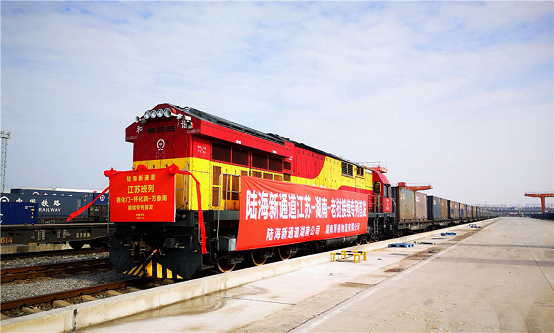
The operation of the freight train marks the formal launch of a new “Jiangsu Manufacturing + Hunan Corridor” cooperation model, creating a new paradigm for interprovincial collaboration along the New International Land‑Sea Trade Corridor. The successful operation of the train underscored the pivotal role of the Huaihua International Land Port. During the 14th Five‑Year Plan period, Huaihua built the international land port from scratch, achieving a historic leap from a traditional inland hinterland to Hunan’s only ASEAN freight consolidation hub and a national trade‑service logistics center.
As the regional operating platform of the New International Land‑Sea Trade Corridor in Hunan, New International Land‑Sea Corridor Operation (Hunan) Co., Ltd. has been deeply involved in and has witnessed the rapid development of the land port. As of December 21, the land port has handled a total of 1,185 freight trains this year, a year‑on‑year increase of 20%, demonstrating strong growth momentum.
An even more notable change is the cargo structure. From early shipments of primary products such as ores, the cargo mix has expanded to cover 17 categories and 406 commodity types, including luggage, general merchandise, chemical products, medium‑sized buses, and photovoltaic raw materials. Average cargo value per container rose from 120,000 yuan at the end of last year to 140,000 yuan.
The “corridor + industry” interprovincial cooperation model not only aggregates cargo from other provinces such as Hubei, Jiangxi and Jiangsu at Huaihua for shipment to ASEAN, but also directly spurred the emergence and chain‑level clustering of local port‑adjacent industries.
(Translated by Yang Hong)